Independent reviews. No paid rankings. No sponsored placements.
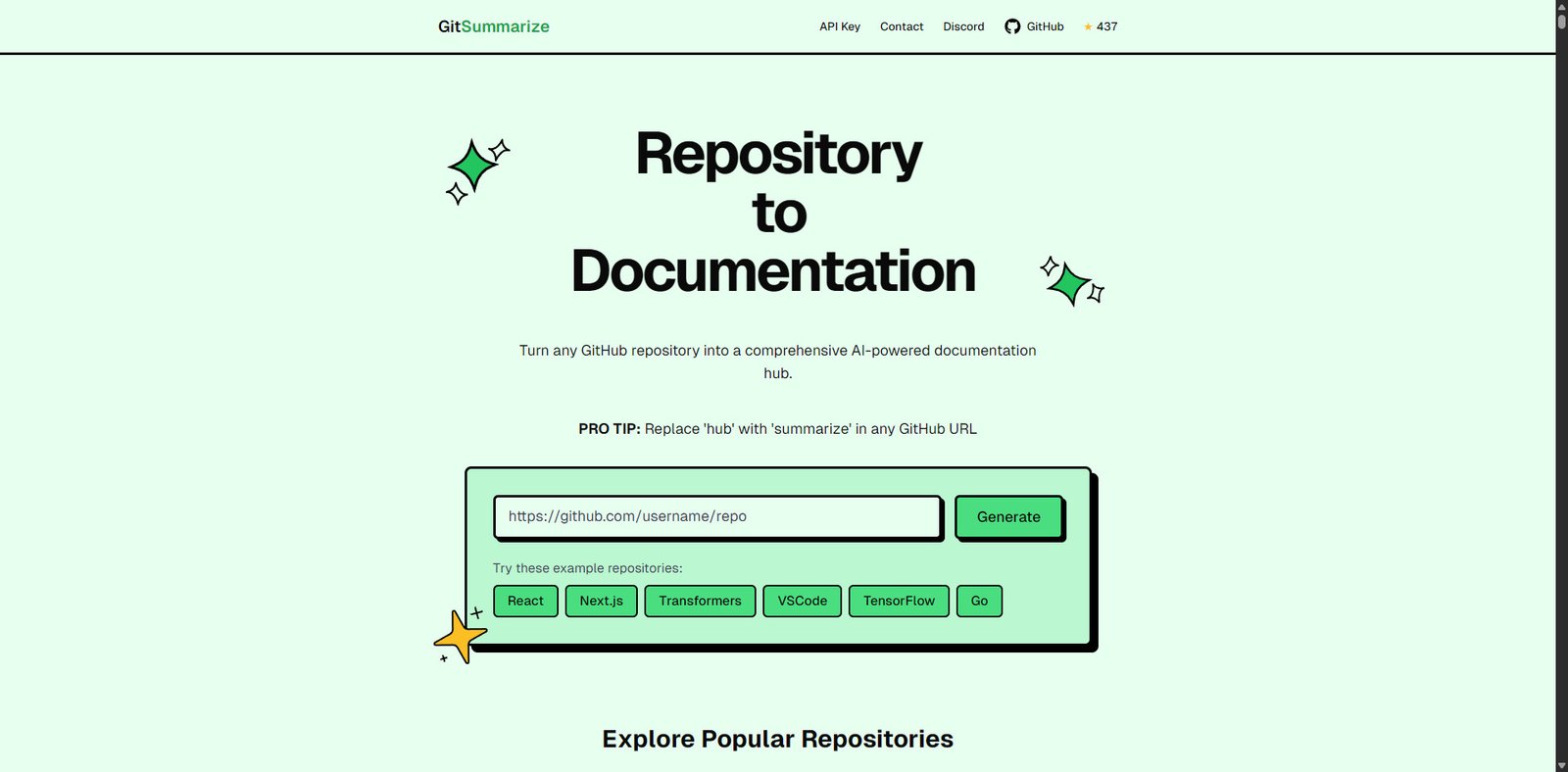
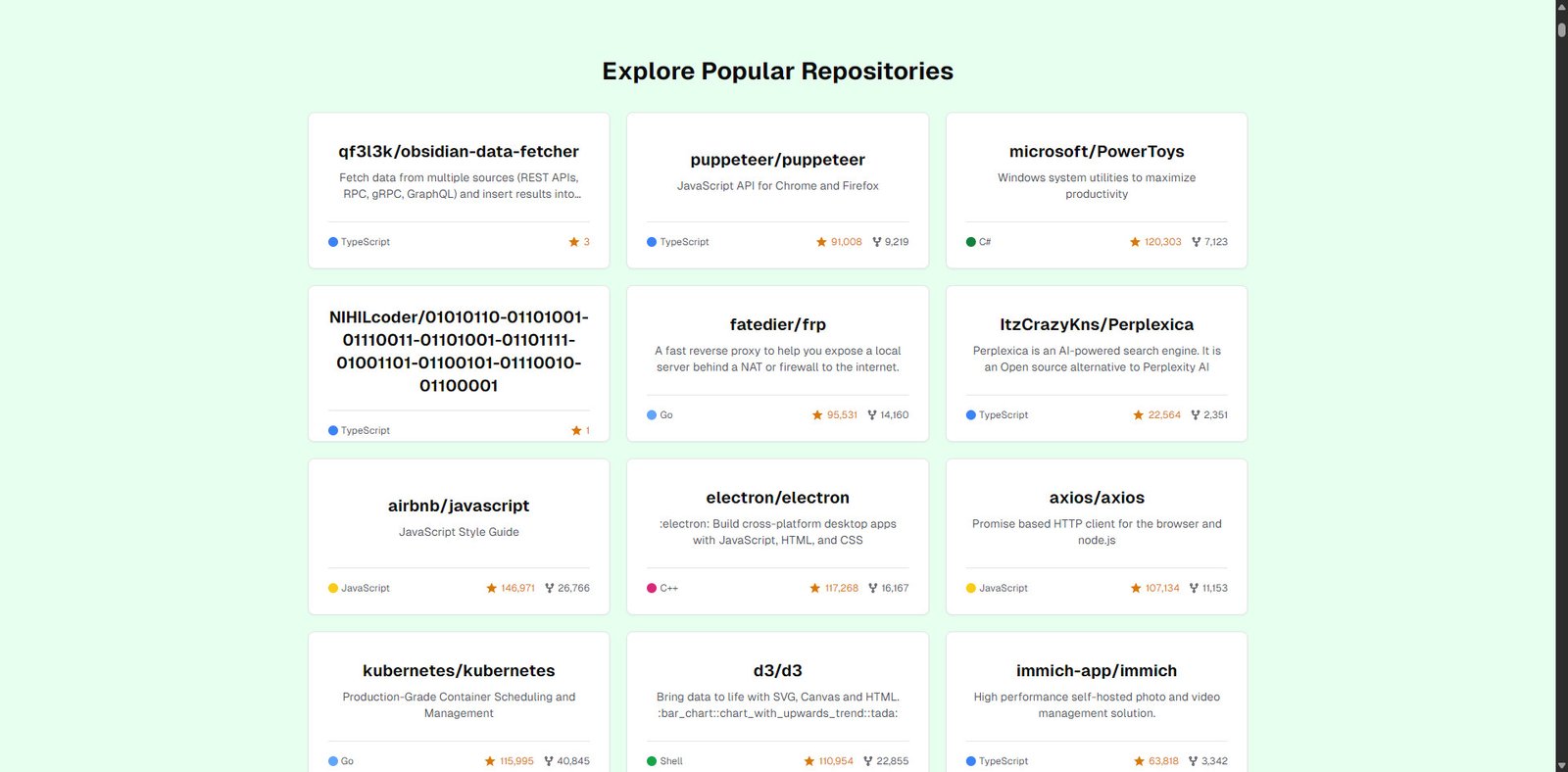

GitSummarize is an AI-powered developer tool designed to analyze Git repositories and generate concise, structured summaries of codebases. It targets developers, technical writers, and teams who need quick insights into unfamiliar projects without manually reading through large volumes of code.
By leveraging large language models, GitSummarize converts repositories into readable documentation, highlighting architecture, key components, dependencies, and workflows. This positions it within the growing category of AI-assisted developer productivity tools.
Pricing Snapshot (2026)
| Plan | Price (Est.) | Key Limits |
|---|---|---|
| Free | $0 | Limited repos/month, basic summaries |
| Pro | $15–$25/month | Higher repo limits, deeper analysis |
| Team | Custom | Collaboration, API access, priority processing |
Note: Pricing may vary depending on repository size and usage volume.
Core Value Proposition
GitSummarize reduces onboarding time and documentation overhead by automatically transforming code into human-readable summaries. It is particularly useful when:
- Reviewing open-source repositories
- Onboarding new developers to large codebases
- Performing technical due diligence
- Creating quick documentation drafts
Key Features
1. Repository-Level Summarization
- Generates high-level overviews of entire Git repositories
- Identifies architecture patterns and major modules
- Explains project purpose and structure in plain language
2. File & Module Insights
- Breaks down individual files and directories
- Highlights core logic, functions, and relationships
- Useful for navigating unfamiliar code quickly
3. README Generation
- Automatically drafts README files from code
- Includes setup instructions, usage, and architecture notes
- Helps standardize documentation across projects
4. Dependency & Stack Detection
- Detects frameworks, libraries, and languages used
- Maps dependencies to functionality
- Useful for auditing or migration planning
5. Git Integration
- Connects with repositories (e.g., GitHub, GitLab)
- Pulls live code for analysis
- Supports private and public repos (depending on plan)
6. AI-Powered Natural Language Output
- Converts technical code into readable summaries
- Adjustable verbosity (brief vs detailed explanations)
Use Cases
Developers
- Quickly understand legacy or third-party code
- Reduce time spent reading unfamiliar repositories
Engineering Teams
- Improve onboarding for new hires
- Maintain consistent internal documentation
Technical Writers
- Generate draft documentation for APIs and systems
- Extract structured insights from codebases
Product & QA Teams
- Understand system behavior without deep coding knowledge
- Assist in feature validation and test planning
Pros and Cons
Pros
- Significant time savings for codebase understanding
- Clean, structured summaries suitable for documentation
- Supports multiple repositories and languages
- Reduces dependency on manual README writing
Cons
- Accuracy depends on code quality and structure
- May oversimplify complex logic in large systems
- Limited customization in lower-tier plans
- Not a replacement for deep code review
Feature Comparison
| Feature | GitSummarize | Manual Review | Traditional Docs Tools |
|---|---|---|---|
| Automated summaries | Yes | No | Partial |
| Code understanding speed | High | Low | Medium |
| README generation | Yes | Manual | Template-based |
| AI explanations | Yes | No | No |
| Real-time repo analysis | Yes | No | No |
Performance & Accuracy
GitSummarize performs well on:
- Small to medium repositories
- Well-structured projects with clear naming conventions
Performance limitations appear in:
- Monolithic or poorly documented codebases
- Highly domain-specific logic requiring context beyond code
The summaries are generally reliable for high-level understanding but should not be treated as authoritative documentation without review.
Security & Privacy Considerations
- Private repository support is typically gated behind paid plans
- Users should verify how code is processed (e.g., encryption, retention policies)
- Not recommended for highly sensitive or proprietary code without compliance validation
Alternatives
| Tool | Strength | Limitation |
|---|---|---|
| Sourcegraph Cody | Deep code search + AI | More complex setup |
| Mintlify | Documentation-first approach | Less code summarization focus |
| Swimm | Contextual documentation | Team-focused, higher cost |
Verdict
GitSummarize is a practical AI tool for developers and teams who need fast, high-level understanding of code repositories. It excels in reducing onboarding friction and generating usable documentation drafts.
However, it should be viewed as a supplementary tool, not a replacement for manual code review or expert analysis. Its value is highest in early-stage exploration and documentation acceleration.
Best suited for:
- Developers exploring new repositories
- Teams managing multiple projects
- Technical writers and documentation workflows
FAQ
What is GitSummarize used for?
GitSummarize is used to generate AI-based summaries of Git repositories, helping users quickly understand code structure and functionality.
Does GitSummarize support private repositories?
Yes, but typically only on paid plans with additional security considerations.
Can it replace documentation tools?
No. It complements documentation tools by generating drafts but still requires human validation.
Which languages does it support?
Most major programming languages, though performance may vary depending on complexity and structure.