Buying an appliance used to mean “does it work?” Now it’s “how much will this thing quietly drain my wallet every year?” Enter the EnergyGuide label, the bright yellow tag that most people glance at for 0.7 seconds before ignoring. Mistake.
Once you understand it, that label is basically a cheat sheet for long-term cost, not just price.
What Is an EnergyGuide Label?
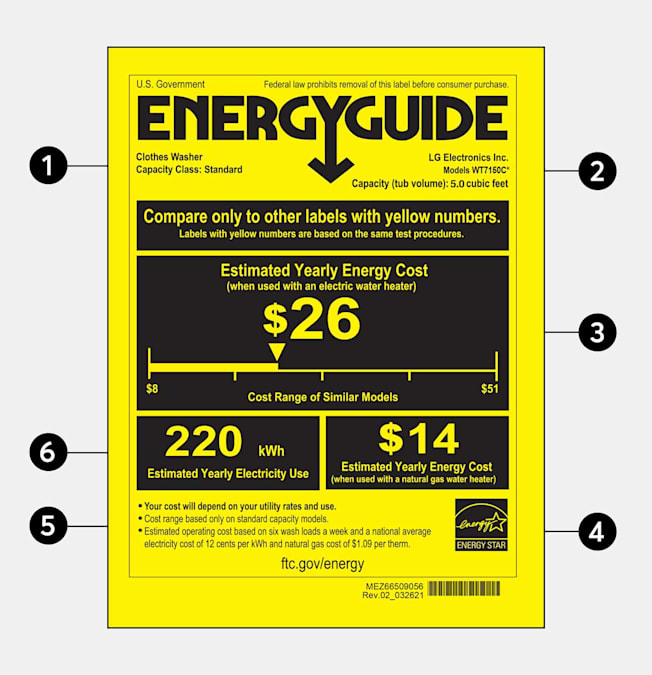
The EnergyGuide label is a standardized tag required on many appliances. It estimates how much energy the appliance uses and what it will cost you annually.
You’ll find it on:
Refrigerators
Air conditioners
Washing machines
Dishwashers
Water heaters
It’s not there for decoration. It’s there to stop you from making expensive mistakes.
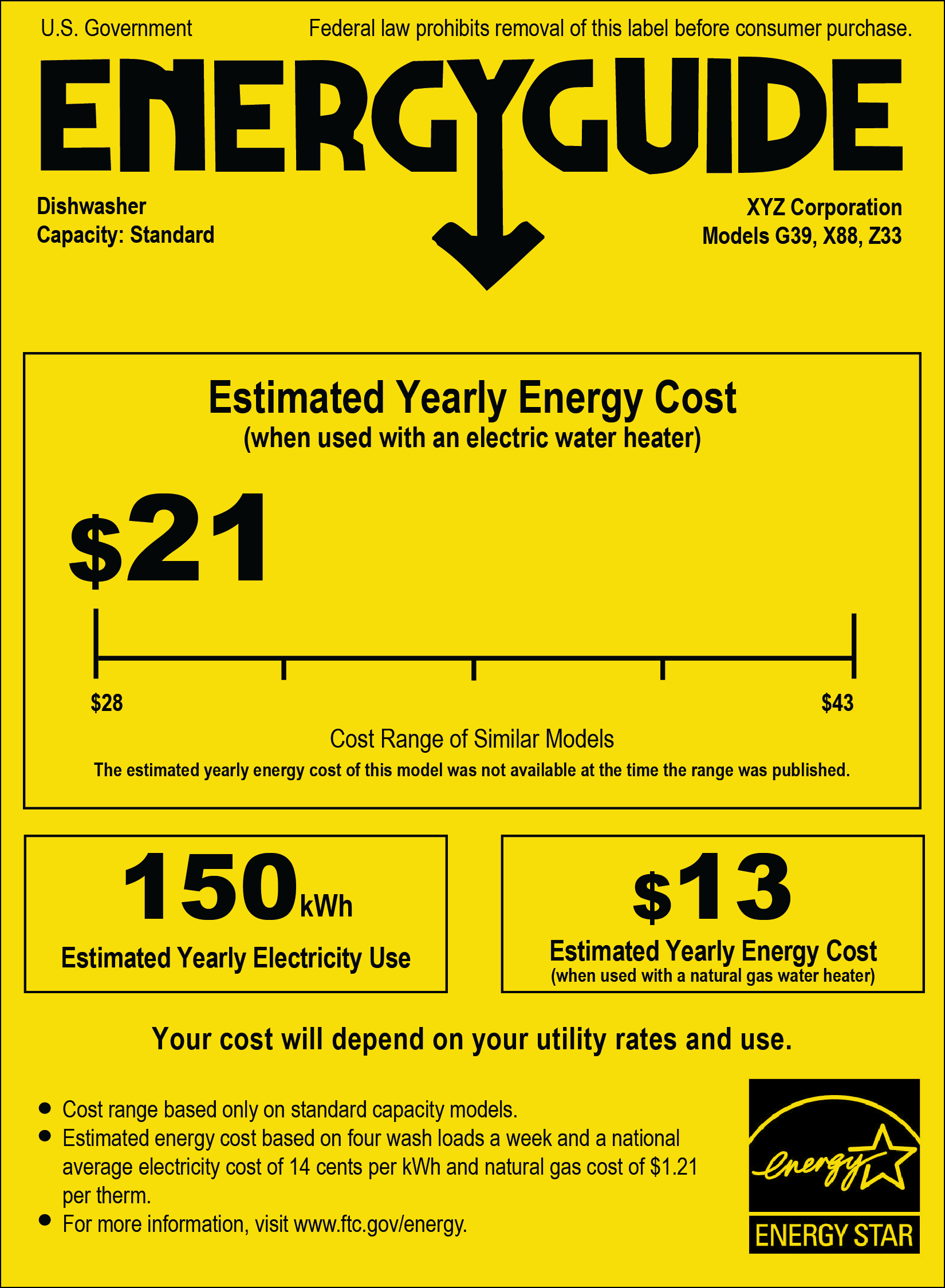
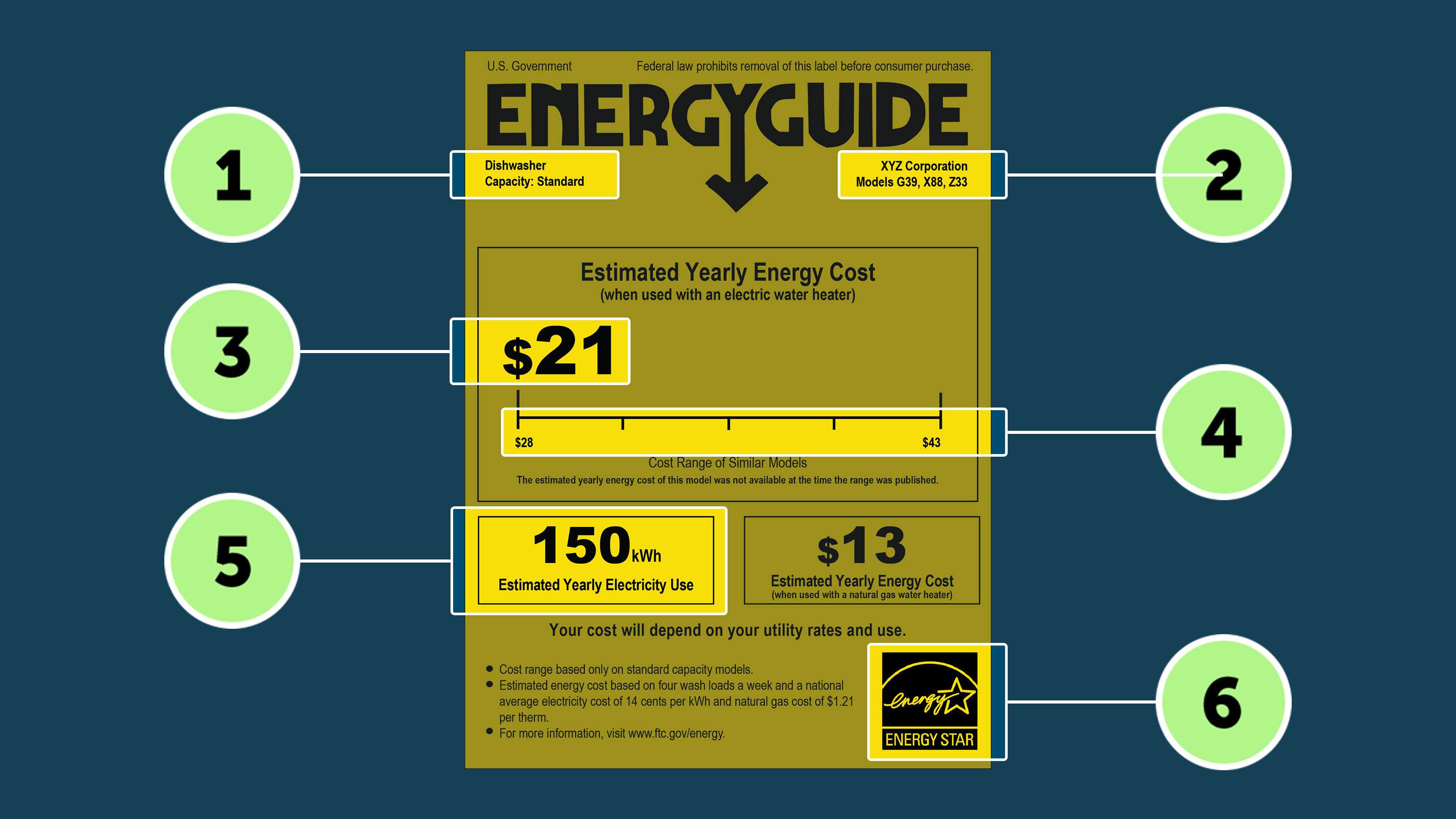
1. Estimated Yearly Energy Cost
This is the number your brain should care about first.
Shown in large bold text
Example: “Estimated Yearly Cost: $65”
What it means:
How much electricity the appliance is expected to use in a year
Based on average usage and national electricity rates
Why it matters:
Two appliances might cost the same upfront, but one could cost double to run over time. Congratulations, you just bought a subscription you didn’t realize existed.
2. Energy Consumption (kWh per Year)
This shows how much electricity the appliance uses annually.
Measured in kilowatt-hours (kWh)
Example: “Uses 450 kWh/year”
Why it matters:
Lower kWh = less energy used
Helps compare efficiency between models
If you like numbers more than marketing promises, this is your section.
3. Cost Comparison Range
This is the horizontal bar with a pointer.
Shows a range from low to high operating costs
Your appliance is marked somewhere on that scale
How to read it:
Left side = cheaper to run
Right side = more expensive
Reality check:
If your model sits on the right side, you’re basically volunteering to pay extra every year.
4. ENERGY STAR Certification (If Present)
Some appliances also include the ENERGY STAR® logo.
What it means:
Meets higher energy efficiency standards
Uses less energy than standard models
Translation:
Less waste, lower bills, slightly less guilt about your electricity usage.
5. Key Fine Print (Yes, You Should Care)
Hidden in smaller text:
Electricity rate assumptions used for cost estimates
Usage conditions (e.g., hours per year)
Model-specific notes
Why it matters:
That “$65/year” assumes average conditions. Your actual cost depends on:
Local electricity prices
How often you use the appliance
So no, it’s not a fixed number. It’s an educated guess.
How to Use the EnergyGuide Label Like a Smart Buyer
Instead of staring at it like abstract art:
✔ Compare multiple models
Don’t evaluate one appliance in isolation. Put two side by side.
✔ Think long-term
Saving $50 upfront is pointless if you pay $30 more every year.
✔ Match usage to reality
Heavy usage = higher real cost than the estimate.
✔ Prioritize efficiency for high-use appliances
Fridges, ACs, and water heaters run constantly. Efficiency matters more here.
Quick Example (Because Numbers Make It Real)
Appliance A:
$500 price
$80/year energy cost
Appliance B:
$550 price
$50/year energy cost
In 5 years:
A = $500 + ($80 × 5) = $900
B = $550 + ($50 × 5) = $800
You thought you were saving $50. You actually lost $100. Impressive.
Common Mistakes People Make
Ignoring the label completely
Choosing based only on purchase price
Misunderstanding yearly cost vs total cost
Assuming all “efficient” labels mean the same thing
The label is simple. People just refuse to read it.
Final Thoughts
The EnergyGuide label isn’t complicated. It just requires about 30 seconds of attention, which is apparently too much for most humans standing in a store.
If you actually use it:
You spend less over time
You make smarter comparisons
You avoid buying appliances that quietly drain your money
If you ignore it, well, the electricity company appreciates your generosity.
Because nothing says smart shopping like paying extra every year for no reason.
Best Review
“Turning clicks into clients with AI‑supercharged web design & marketing.”
Let’s build your future site ➔
Passionate Web Developer, Freelancer, and Entrepreneur dedicated to creating innovative and user-friendly web solutions. With years of experience in the industry, I specialize in designing and developing websites that not only look great but also perform exceptionally well.